Blue Metro Line Transforming Real Estate
More affordable homes, better connectivity, and strong rental returns draw buyers and renters alike
The launch of the Dubai Metro Blue Line is doing more than just enhancing mobility it’s actively reshaping the city’s property landscape. Areas once considered secondary Mirdif, Dubai Silicon Oasis, Academic City, and even established waterfront communities like Dubai Creek Harbour, are now emerging as key real estate hotspots for both homebuyers and investors.
Metro Access = Real Estate Growth
Improved public transit infrastructure has long been linked to property price appreciation and rental demand and Dubai is proving it again. The Dubai Metro Blue Line, connecting the city’s east and west, is acting as a major growth catalyst beyond traditional downtown zones like Downtown Dubai and Dubai Marina.
According to property experts at A1 Properties, these once-overlooked areas are experiencing a surge in demand particularly from first-time buyers and mid-income investors seeking high-potential, future-ready communities.
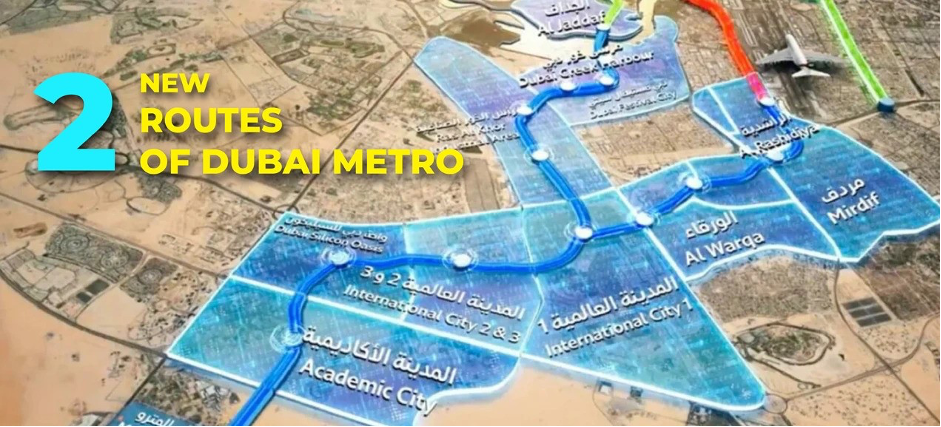
Why Mirdif, Silicon Oasis, Academic City & Dubai Creek Harbour?
As of Q2 2025, these communities are experiencing high volumes of buyer and tenant inquiries. Here’s why:
• Improved public transit connectivity via the Metro Blue Line
• Lower entry price points compared to central or coastal areas
• Planned retail, healthcare, and educational infrastructure that appeal to families
• Close proximity to key employment hubs and business districts
• Flexible off-plan payment plans in metro-connected projects
Property Price Trends in 2025
Dubai’s real estate market has remained strong throughout 2025:
• Total residential sales exceeded AED 120 billion in Q1 alone a year-on-year rise of 18%
• Home prices increased by 5.6% YoY
• Apartments rose by 4.2%
• Villa prices surged 7.9% due to low supply in gated communities
While luxury properties continue to dominate, demand for mid-income homes near metro links is growing rapidly, with communities like Dubai Creek Harbour, Arjan, and JVCgaining traction.
Rising Rental Demand
Due to mortgage rates holding steady between 5.25% and 5.75%, many residents are still choosing to rent further fueling rental inflation in metro-connected and employment-linked areas.
Current average rentals:
• 1-bedroom in sought-after districts: AED 80,000–82,500/year
• 2-bedroom in high-demand zones: up to AED 125,000/year
Expect continued rental growth through 2026, especially in areas with new metro stations.
Foreign Investment & Market Outlook for 2026
International investors from India, Russia, China, and the UK are flocking to Dubai for its economic stability and real estate returns. Over 58% of Q2 2025 transactions were international.
Yet, the market still faces a supply imbalance. Most upcoming projects are luxury-focused, leaving limited inventory in the affordable and mid-income segments.
What to Expect in 2026
• Stable yields in metro-connected communities
• Price growth between 3.5% and 5.2% expected by mid-2026
• Areas like JVC, Al Furjan, Arjan, Academic City, and Dubai Creek Harbour are expected to outperform in both resale value and rental income
Final Thoughts
The Dubai Metro Blue Line isn’t just a transit upgrade it’s a real estate game changer. For buyers, renters, and investors seeking strong returns and lifestyle convenience, communities like Mirdif, Silicon Oasis, Academic City, and Dubai Creek Harbour are becoming smart, strategic choices in a rapidly evolving city.
Looking to invest or move? Now may be the perfect time to explore these emerging hot zones.
Click here to learn about latest projects
Click here to meet the team